

 Tweet
Tweet
Attached Files
-
-
Perpetual motion and Quantum physics
=
To be true ''Perpetual motion'' must obey some physical law
The Classic / Newtonian physics forbids such phenomena
But what does Quantum physics say?
The Quantum physics says:
[ In 2017 new states of matter, time crystals, were discovered in which
on a microscopic scale the component atoms are in continual repetitive motion,
thus satisfying the literal definition of "perpetual motion".
However, these do not constitute perpetual motion machines in the traditional sense
or violate thermodynamic laws because they are in their quantum ground state,
so no energy can be extracted from them; they have "motion without energy"]
It means that on a microscopic scale ( in their quantum ground state)
the Quantum physics can allow "perpetual motion" as a
"motion without energy" . . . but . . . then the ''zero-point energy'' comes
[ Vacuum energy and zero-point energy:
In order to explain effects such as virtual particles and the Casimir effect,
many formulations of quantum physics include a background energy which
pervades empty space, known as vacuum or zero-point energy.
The ability to harness zero-point energy for useful work
is considered pseudoscience by the scientific community at large.
Inventors have proposed various methods for extracting useful work
from zero-point energy, but none have been found to be viable,
no claims for extraction of zero-point energy have ever been validated by
the scientific community, and there is no evidence that zero-point energy
can be used in violation of conservation of energy.]
#
If the ''Perpetual motion'' is true concept then the virtual particles
must be tied with real particles (Casimir effect ) by
''The Law of conservation and transformation energy/ mass''
#
''Perpetual motion'' concept is tied with
''The Law of conservation and transformation energy/ mass''
== -
There is a strange situation:
everybody knows that vacuum is not an empty continuum,
but when it comes to give the physical parameters of vacuum,
then one educated man is as dumb as the next learned guy,
who is as dumb as the learned man next to him.
Why?
Because from the school we were told that ''ideal gas''
(with temperature T=0K) is an abstract model and
until today we live with such '''scientific knowledge''.
As it says: ''Old habits die hard''
====Comment
-
The Philosopher's Stone and* Quantum particles.
===
a)* First question:
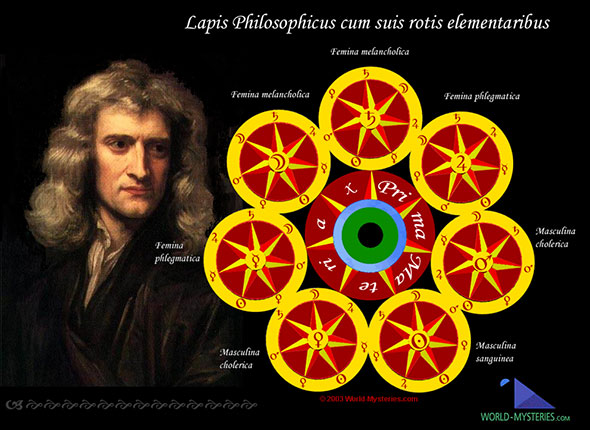
What is* the Philosopher's Stone?
The Philosopher's Stone is a Primary Matter.
All physical elements was derived from one common
source -- primary matter (first matter in the universe)
Philosopher's Stone consist of quantum particles.
b)* Second question: *
Where is the Philosopher's Stone?
Before to talk about Philosopher's Stone we must to think
about the reference frame of this ''stone''
because the Philosopher's Stone must exist somewhere.
#
Different conditions of reference frame can change the images of stone.
If the Philosopher's Stone is in a desert* then It is covered with sang.
If the Philosopher's Stone*is in tundra then It is covered with lichen.
If the Philosopher's Stone is at a bottom of sea then It is covered with corals.
If the Philosopher's Stone is in a zero vacuum then It* isn't a bare stone but
the Philosopher's Stone - particle in T=0K is covered with:
1) the theory of ideal gas,
2) quantum theory ,
3) Lorentz / Einstein's SRT.
c)* Third question:
Does* the Philosopher's Stone hidden in a zero vacuum?
Yeah, because all stars, planets . . .* all micro and macro
material objects are hung in the* void of zero vacuum.
Then:
1)
according to* the theory of ideal gas the Philosopher's -particle
must have geometrical form of circle pi=c/d= 3,1415 . . . .
2)
according to* the theory of ideal gas the Philosopher's -particle
must have Boltzmann mass k=R/N(Avogadro)
3)*
according to quantum theory quantum particles must have
energy-mass:* +/- E=Mc^2
4)
according to quantum theory quantum particles must have
own* Goudsmit / Uhlenbeck inner angular impulse h * = h /2pi.
5)
according to SRT quantum particles can obey Lorentz transformations.
============Attached FilesComment
-
-
We all know your idea is crazy.
The question is whether it is cray enough
to have a chance of being correct
/ Niels Bohr /
#
What is the temperature of Hawking radiation ?
The temperature of the background radiation - energy
left over from the Big Bang - is about 2.7 kelvin, but the
temperature of Hawking radiation is only 1.2 nanokelvin
#
My opinion
Book: ''' Stephan Hawking, A life in science''
''Together with Brandon Carter and Jim Bardeen, Hawking
wrote a paper, published in Communications in Mathematical
Physics , pointing out . . . . . the team commented,
'' In fact the effective temperature of a black hole is
absolute zero . . . . No radiation could be emitted from the hole.''
/ by Michael White and John Gribbin, page 156./
But later (!) , . . using concept of entropy and Heisenberg
uncertainty principle and quantum fluctuations
Hawking changed his mind and wrote that black hole can emit
( Hawking radiation )
#
So, in the beginning (according to calculations) the ''black hole'' had
absolute zero temperature T=0K, but . . .
. . . but thanks to quantum fluctuations Hawking radiations was arisen
In others words:
''black holes'' are local micro- scheme of absolute zero vacuum: T=0K
So called a ''black hole'' is only another name of the true vacuum: T=0K
#
Many say:
''Hawking radiation has never been experimentally verified.''
In my opinion: Hawking radiation (as appearances of virtual particles
from the event horizon of black hole / zero vacuum ) was experimentally
observed in many physical effects:
a)
Scientists create light from vacuum
November 17, 2011,
Vacuum energy - Wikipedia /.
==============Attached FilesComment
-
-
"Theoretical physicists used to explain what was observed.
Now they try to explain why they can't explain what was not observed.
And they're not even good at that."
/ Sabine Hossenfelder, /
nbcnews.com - Why some scientists say physics has gone off the rails
====Comment
-
"beauty makes all beautiful things beautiful "Originally posted by socratus View Post
by beauty all things are beautiful
by largeness* things are longer than another
by shortness things are shorter than another
===Comment
-
an argument to find truth in beauty :Originally posted by socratus View Post
a small circle whose circumference spins* around its center / axis
(according to Goudsmit / Uhlenbeck inner angular impulse: h* = h /2pi )
==============Comment
-
Question;Originally posted by socratus View Post
What conditions must be to find the truth in beauty?
My answer.
The theory must be simple, clear, intelligible for usual common sense
(not only for professional mathematicians or physicists)
Question.
What is prevented this aim?
My answer.
The abstract thinking of professionals is prevented this aim:
they want to understand theory without to know the
geometrical forms of quantum players-particle
(string wouldn't behave like triangle and
triangle wouldn't behave like circle . . . .
and circle wouldn't behave like cube . . . . etc )
=======Comment
-
-
Beauty, truth and ... physics?
/ Murray Gell-Mann at TED 2007 /
Armed with a sense of humor and laypeople's terms,
Nobel winner Murray Gell-Mann drops some knowledge
on TEDsters about particle physics, asking questions like,
Are elegant equations more likely to be right than inelegant ones?

============Comment




Comment