This forum is preserved as a permanent archive. The community continues at eMedia Press.

Announcement

Collapse
No announcement yet.

Using non-conservative electric fields to draw energy from the quantum state

Collapse
X
 
  • Filter
  • Time
  • Show
Clear All
new posts

  • Using non-conservative electric fields to draw energy from the quantum state

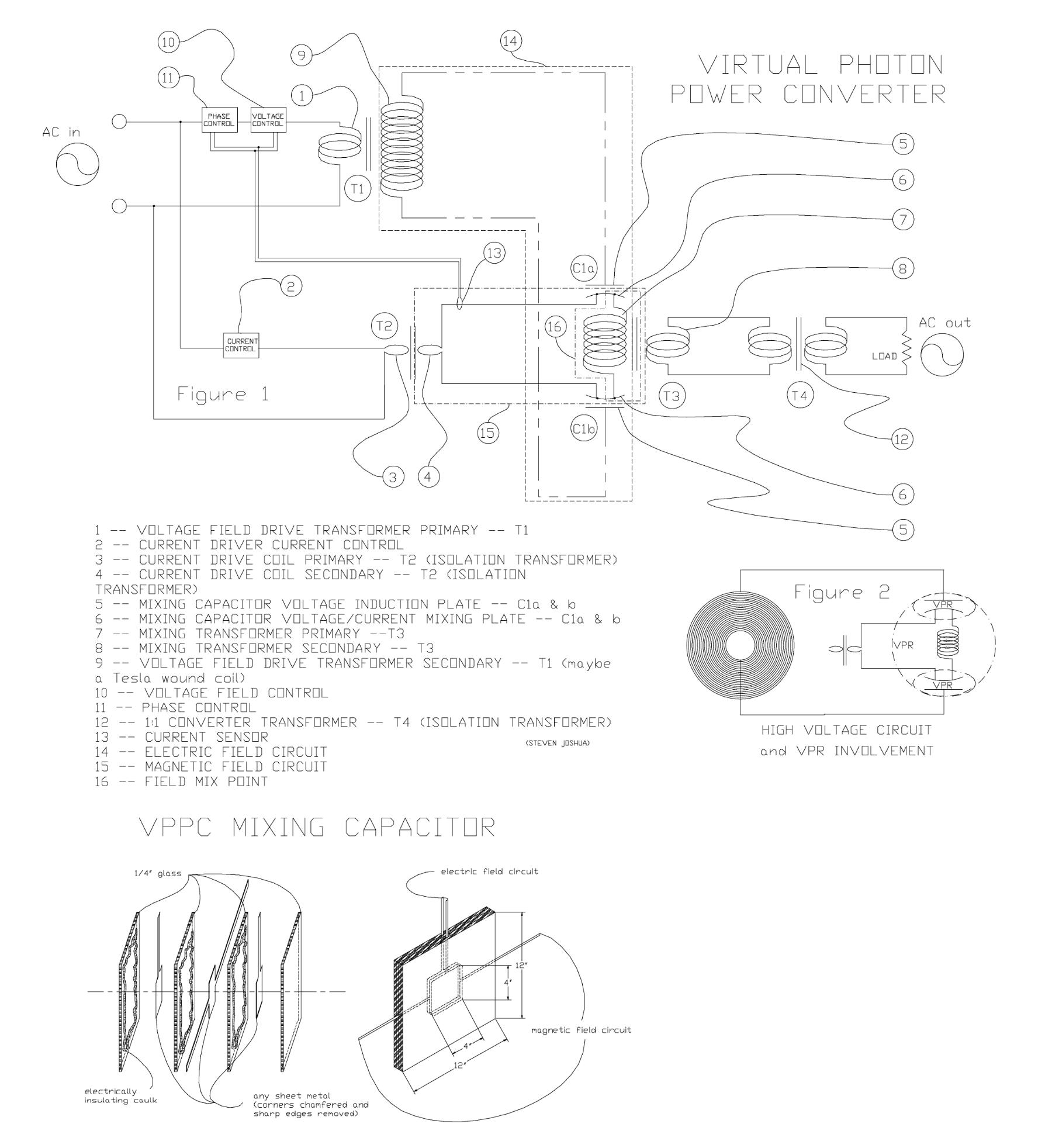
    VIRTUAL PHOTON POWER CONVERTER (more detail:
    Power ConverterElectric Field Transformer). Throw in the application of the three vectors to EMF, shaping, mono-polarity fields, and standing waves, then this spectrum could get real sci-fi with electromagnetic force fields and propulsion.
    Attached Files
  • #2
    neat

    I'm going to try to make one ... I'll let u know!

    Comment


    • #3
      Originally posted by berilium16 View Post
      I'm going to try to make one ... I'll let u know!
      A side note; keep the mixing capacitor small (C1) -- in capacitance -- in order to keep the high voltage current down. The dimensions on the drawing may make the capacitance a bit too large.
      Go for it. This is a new field.

      Comment


      • #4
        A side note

        When I first put this circuit on paper and saw what I had, I went into denial. "It can't be that simple!", I kept thinking. After a week of trying to tear the circuit apart and find fault with it (I have a degree in analog electronics and spent a number of years troubleshooting and repair of analog electronics on a component level -- TV repairman amongst other things), the circuit kept looking better and better.

        Don't be fooled by the apparent simplicity of the circuit. Analyzing the circuit you will see -- once the current leaves the capacitor plate of C1 and enters and becomes a part of the induced high voltage electric field across 7 -- the VA capabilities of this device. And...there are no moving parts!

        Because this is a new analog circuit, a rarity in and of itself, I recognized there was a string of unknowns --variables -- that only a prototype could answer. (Some of these unknowns involved a recognition of my own technical ignorance.) And...because there is so many directions the concepts involved can go -- prototype experimentation, the more people working on this, the better.

        This posting is seed looking for fertile ground. This device has been on my website since last summer and now I'm actively searching for 'mad scientists' to take these ideas further.


        Peace
        Steven

        Comment


        • #5
          This is very interesting, and I thought it was interesting in march when you first posted it, but as I don't have a degree in electronics I would have to study it in depth before I grasped it's operation. What would be more useful is more concrete information on how to build and test for the phenomena you describe. Intuitively it sounds correct to me, but without more concrete examples I don't know where to start. Do you have pictures of any prototypes you have built? Suggestions on which off-the-shelf parts would be usable? The capacitor construction information is very useful, I will try to build one of those shortly.

          Thanks!

          Comment


          • #6
            @7imix--thanks for summing that up. I totally agree.

            When I first read the post I was interested, but the lack of any simple concrete steps to start exploring this idea turned me off of taking it any further. I'd love some examples on how to start exploring the concept in my own lab. It sounds like a fascinating, potentially plausible concept.

            Comment


            • #7
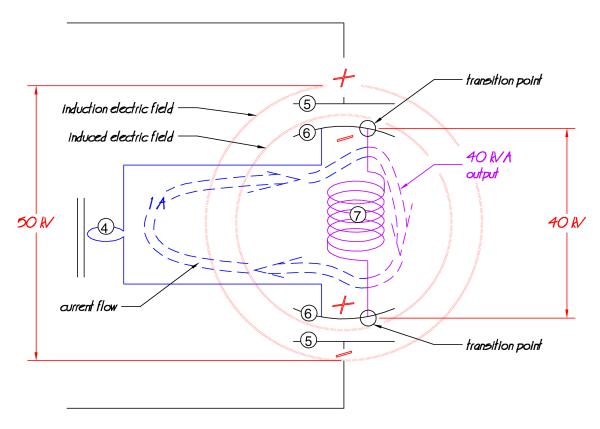
              an operation illustration

              This picture may help illustrate the VPPC's operation. The voltage drop across the capacitors (40kV) is an arbitrary figure. Meaning, this may vary with power draw and is a major unknown.

              Comment


              • #8
                http://www.uspto.gov/web/patents/pat...-20141216.html
                Attached Files

                Comment

                Working...
                X