-
-
Bedini SG - The Complete Advanced Handbook
Thanks Dave,
We can't tell you how excited we are to finally release this book!
Here is a little about the upcoming book - 9 more days! Bedini SG – The Complete Advanced Handbook – Release Date November 2, 2014 | A & P Electronic Media – Digital Publishing by Aaron Murakami & Peter Lindemann
And here is a bit about the Watson Machine - we're giving details that have been in the open for years but nobody has ever noticed or at least nobody has ever talked about them. And there are some details that really have never been shared. It will all be in this book because it is somewhat of a tribute to a lot of John's work that he has been involved with over the years - and not just the SG, but the "ENERGIZER" has always been the KEY and that is definitely a vital part of the 1984 machine: Watson Machine | A & P Electronic Media – Digital Publishing by Aaron Murakami & Peter Lindemann
Between all three of these books, I would have to agree that all three books disclose more than any other single compilation regarding these types of circuits.
And, I also know there are a few builders around here that are working on some of the exact principles that are being discussed in the advanced book.
More to come... Sincerely,
Aaron Murakami
Books, Videos, ESTC Conference Info, Blog, etc. https://emediapress.com
-
What is the price of the book?Comment
-
Thank You!
David,
Thank you for starting this thread and for your kind remarks. This book has been in the works since early May, and has been my top priority for the last 10 weeks. John has already "signed off" on the manuscript and the final summary and conclusion is being written.
This book has presented a significant challenge to be worthy of the title "Bedini SG, The COMPLETE Advanced Handbook." To explain everything John has done, in detail, would require the writing of a 800 page book. So, I have focused on an in-depth explanation of the ESSENCE of the method and its historic development. It clearly explains how many decades John has been ahead of the rest of us, but it also explains exactly what he accomplished, and how! The primary gain mechanism of the Energizer is fully explained.
The book focuses on the revelation of the "self-running electromechanical machine" and the multitude of ways John accomplished the goal. Anyone who has done the work and learned the science will be able to replicate John's results and develop their own working hardware.
There are lots of surprises in this information package. Only one week away. OK. I gotta get back to work! LOL
PeterComment
-
Count me in. I Can't wait.
Thanks for all your efforts.
StephenPotential, is a terrible thing to waste.Comment
-
Bedini SG - The Complete Advanced Handbook
Yesterday, Peter and I did a video going through a lot of details on all three books including a basic demo. It's about 1 hour 15 minutes and will be on bedinisg.com after we launch the Advanced book on Thursday. I might post a link to it here before there so you can see it ahead of time.
The Advanced book package will include:- Peter Lindemann's presentation from the 2014 Energy Science & Technology Conference showing a full demo and giving a presentation explaining quite a bit about the machine - all completely relevant to the Advanced book.
- Details on the Watson Machine that have never been released.
- How we get the machine to switch into higher speeds than normal - so higher RPM, more output for less input - and that is different from the benefit in the next bullet point!!!
- How we are able to increase the output of the machine by 100% by only increasing the input draw by 50%.
- And of course quite a bit more than that!
The combo special for the Beginner's and Intermediate book will disappear and all three books will be available individually or as a complete 3 book package.Sincerely,
Aaron Murakami
Books, Videos, ESTC Conference Info, Blog, etc. https://emediapress.com
Comment
-
Bedini SG The Complete Advanced Handbook
The Advanced book will be available at 10AM tomorrow morning Pacific Time Zone.Sincerely,
Aaron Murakami
Books, Videos, ESTC Conference Info, Blog, etc. https://emediapress.com
Comment
-
Bedini SG - The Complete Advanced Handbook
The time has come - Bedini SG The Complete Advanced Handbook is available now! If you don't have the beginner's or intermediate book, make sure to get the entire Trilogy at a great discount!
GET IT NOW: Bedini SG - The Complete Handbook Series for the Bedini SG & Bedini SSG
----------------------------------------------------------------------------------------------------------
Tesla's Technology Miniaturized And Simplified For The Masses
Legacy of a World-Class Inventor & Humanitarian
Spokane, Washington - November 2, 2014
Fifteen years ago, Shawnee Baughman of Coeur d'Alene, Idaho was competing for an elementary school science project and an electronics wizard happened to work in the same building as her father. She was provided with a simple schematic and a bit of coaching. With that, she went off on her own to build a little motor that spun a wheel, lit an LED light, and ran from the same 9 volt battery for the entire five days of the science fair.
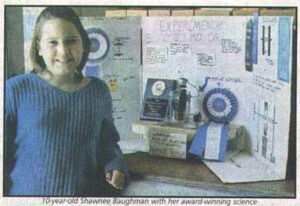
Shawnee won a Blue Ribbon for the science, and a special award for Best of Show, and ever since that time, the machine has been called the "School Girl Motor" or the "Bedini SG" for short.
John Bedini is an internationally acclaimed audio engineer who has many claims to fame, which include developing the first solid state audio amplifiers that actually replicated the sound qualities of the old vacuum tube models. But his favorite hobby has always been the study of advanced energy conservation methods using unconventional electromagnetic principles that most engineers have never heard of.
GET IT NOW: Bedini SG - The Complete Handbook Series for the Bedini SG & Bedini SSG

The Bedini SG has since taken the world by storm, spreading far and wide across the internet, and allowing countless thousands of people to build their own model and study the physics involved. Just about anybody can get one to spin, but only a handful have ever achieved a level of performance that demonstrates what some would consider "free energy."
Many experts claim this is impossible, but actually there are many systems that produce more work than we're required to supply, because the excess energy is provided by the environment. A good example of this is the refrigerator. This ordinary kitchen appliance typically operates with a "coefficient of performance" of 2.0, which means that twice as much heat is removed from inside than the equivalent electricity used to do it. Most scientist believe that this kind of performance is only possible with heat systems, but John Bedini and others have demonstrated these principles with electromagnetics as well.
In 1977, Ilya Prigogine received a Nobel Prize for what is basically an extension to conventional thermodynamics, which only describe how heat operates in "closed systems." Those are systems that are cut off from any external form of energy. Prigogine's work helped to extend our understanding of thermodynamics to include systems that are open to the environment, which slows the appearance of entropy down and allows more total work to be done than what we have to supply. That is exactly what the Bedini SG demonstrates in a simple and most elegant way.
GET IT NOW: Bedini SG - The Complete Handbook Series for the Bedini SG & Bedini SSG
Several years ago, A & P Electronic Media, a digital publishing company founded by Aaron Murakami and Peter Lindemann published the first ever authoritative book on Bedini's technology. Murakami and Lindemann have collectively known John Bedini for over 45 years and both have been personally mentored by him.
Their first book outlining the basics of this technology is Bedini SG - The Complete Beginner's Handbook, which includes all of Bedini's own personal specifications for building his machines, as well as an in depth explanation of the science and theory behind its operation. With this book, just about anyone can build a working model.
The second book is Bedini SG - The Complete Intermediate Handbook. It digs deeper into the theory of the technology and shows how John's circuits act like miniaturizations of systems developed by Nikola Tesla over 120 years ago. What this process does is take the high voltage spikes from an electromagnetic oscillator and charge a capacitor with them. This capacitor is then discharged into a load, such as a lead acid battery.
Engineers are normally taught to ground these spikes out so they don't damage other electronics on an electrical line. In fact, that is what a "surge protector" is designed to do. Through experimentation, John discovered that these electrical transients have a number of unusual characteristics. One of these benefits includes the ability to charge batteries extremely efficiently, and even revive some batteries that are considered dead.
Although many engineers claim these spikes can't charge a battery because they are just high voltage with virtually no current, there are thousands upon thousands of global experiments being conducted with these circuits that prove otherwise. And if these spikes are used to charge a capacitor and then that capacitor is discharged into a battery, even more amazing results can be had. And this is one of the methods for using electricity that Nikola Tesla developed back in 1893. John's circuits are literally a miniaturized version of some of Tesla's greatest discoveries.
A & P Electronic Media has now released Bedini SG - The Complete Advanced Handbook. The finale to this paradigm-shattering trilogy teaches the reader how to convert the mechanical work produced on the wheel into even more electricity, in an extremely efficient way. As a matter of fact, it is so efficient that at the recent 2014 Energy Science & Technology Conference, Peter Lindemann was able to demonstrate how to light a large bank of LEDs to a very bright level without reflecting almost any mechanical load back to the machine.
This third book also reveals many details from John Bedini's other related technologies, some of which have never been released or explained to the public before. In that sense, it also doubles as a tribute to his tireless contribution to the field of advanced energy research over the last four decades.
Learn more about this amazing trilogy at Bedini SG - The Complete Handbook Series for the Bedini SG & Bedini SSG
###
Sincerely,
Aaron Murakami
Books, Videos, ESTC Conference Info, Blog, etc. https://emediapress.com
Comment
-
Great book and demo!
I've got the first questions: Why 10 wires instead of one on genny coil? To change things for experiment or will one wire do the same? AlComment
-
generator coil
Please look at the following thread: http://www.energeticforum.com/renewa...e-coils-4.htmlOriginally posted by alman View Post
I'd encourage you to look at that Tesla Bifilar patent.
To experiment to see if you can see a difference make 2 generator coils to test.
1. Make one where you have a single winding of x length.
2. Make one where you have 2 windings, each is 1/2 the length of the first coil and then wire the top of one to the bottom of the other in series.
When we made that coil, we were doing quite a few different tests and just used it like that.Sincerely,
Aaron Murakami
Books, Videos, ESTC Conference Info, Blog, etc. https://emediapress.com
Comment
-
will do. thanks for fast response. AlComment
-
Adding to What Aaron already said
Dear Alman,Originally posted by alman View Post
Thanks for the question. When Aaron and I built the machine, the generator coil was a major unknown. The 10-filar winding was the only way to wind it where each separate winding had the same number of turns, the same length AND the same resistance. No other winding method would allow multiple windings that all had the same characteristics, built capacitance into the inductor, and gave us multiple options for voltage production after the fact.
In the end, it was about "options" and we wanted as many as possible. You can see from the test data in the book, the drag co-efficient of the coil was right where we wanted it.
Thanks,
PeterComment
-
Hi Peter,
great work, well explained. I have a question about what you wrote on page 49.
Out of the two arrangements (from John's '84 book) on the right side you seem to address only the second one (Fig.11), while John on the book said that he had done experiments with the first one (fig.10) and "decided to stay with this one".
That arrangement also showed capacitors across the two coils.
I was just curious to know why you skipped that?
thanks,
MarioComment
-
Trying to Focus on the "Principle"
Hey Mario,Originally posted by Mario View Post
Good question. The main reason I "skipped it" was that that first type of Energizer was built from an existing device that John modified. The part numbers and exact modifications have never been revealed, so it wasn't something experimenters could run right out and duplicate. The internal configuration was similar to the illustration on page 47, and the actual unit is pictured on page 48. I think he built it out of a "ceiling fan motor". The purpose of the capacitors across the coils was probably to produce a resonant effect at the target speed to further increase output and reduce drag.
This is all well within John's knowledge base and capability, but not a good place to get beginners started on making their first Low-Drag Generator.
As I said in my previous post "I have focused on an in-depth explanation of the ESSENCE of the method and its historic development."
I hope that helps.
PeterLast edited by Peter Lindemann; 11-05-2014, 04:42 PM.Comment
-
Hi Peter,Originally posted by Peter Lindemann View Post
Ok, that clears it up, thanks. From experiments I know that by adding resonant caps to this kind of generator you get the biggest breaking effect or stall you can have, at resonant frequency, so who knows what John was up to.
Anyway, if you don't mind I just wanted to say something I've learned from personal experience (beginners insert your earplugs ). To get the best out of the "Kromrey" or "G-field" effect, minimize coil resistance, maximise coil impedance (big core, laminations or welding rods), maximise speed, minimize load resistance/impedance.
I have found the explanation of what happens to the phase angle very interesting on this site. This is not about the Adams motor, so just check page 10 and 11, also, on page 11 there's a neat animation of the parameters involved:
Simple Adams Motor Concepts
regards,
MarioLast edited by Mario; 11-05-2014, 05:24 PM.Comment

This forum is preserved as a permanent archive. The community continues at eMedia Press.
- If this is your first visit, be sure to check out the FAQ by clicking the link above. You may have to register before you can post: click the register link above to proceed. To start viewing messages, select the forum that you want to visit from the selection below.

 Tweet
Tweet
Comment