
Announcement
Collapse
No announcement yet.
Vibrator powering Bedini Coil
Collapse
X
-
Hi John,
Your post topic recalls Ossie's battery charger setup of some years ago in which he placed a vibrating reed switch into the base of a switching transistor and got multiple spikes from the series of collapsing field sequences instead of a single switch on spike, perhaps you had come across his document on it too:
I mention this because his reed switch may be substituted by such a vibrator and perhaps the latter would be more durable than the reed switch. Especially when used in series with the base-emitter electrodes of a transistor with an also series resistor to reduce any excess current due to higher than 6V supply voltages. Although Ossie suggested two reed switches in series to reduce the wear-out process (see his post on this here
A Working Radiant Free Energy System ) I believe the use of such vibrator in his setup could lead to higher power levels.
Gyula
PS Is there somewhere a schematic on the transistorized type that replaced the mechanical ones?Last edited by gyula; 10-09-2011, 09:03 PM.
-
Hi Gyula
I hadn't seen Ossies thread - will have a look. For some reason the coil I'm using doesn't like an inline resistance - need to look into this more, however the spikes are impessive.
Some info here on solid state replacements of vibrators:
The AWA Journal - More Adventures With Transistors
If you google "replacing radio vibrator with transistor" you should get some more info.
Regards
John
Comment
-
Hi John,
Thanks for the link, was useful and now that I have learnt about the inner world of vibrators I think that replacing the reed switch in Ossie's setup with either a mechanical or a SS type vibrator would not be a brilliant idea, lol.
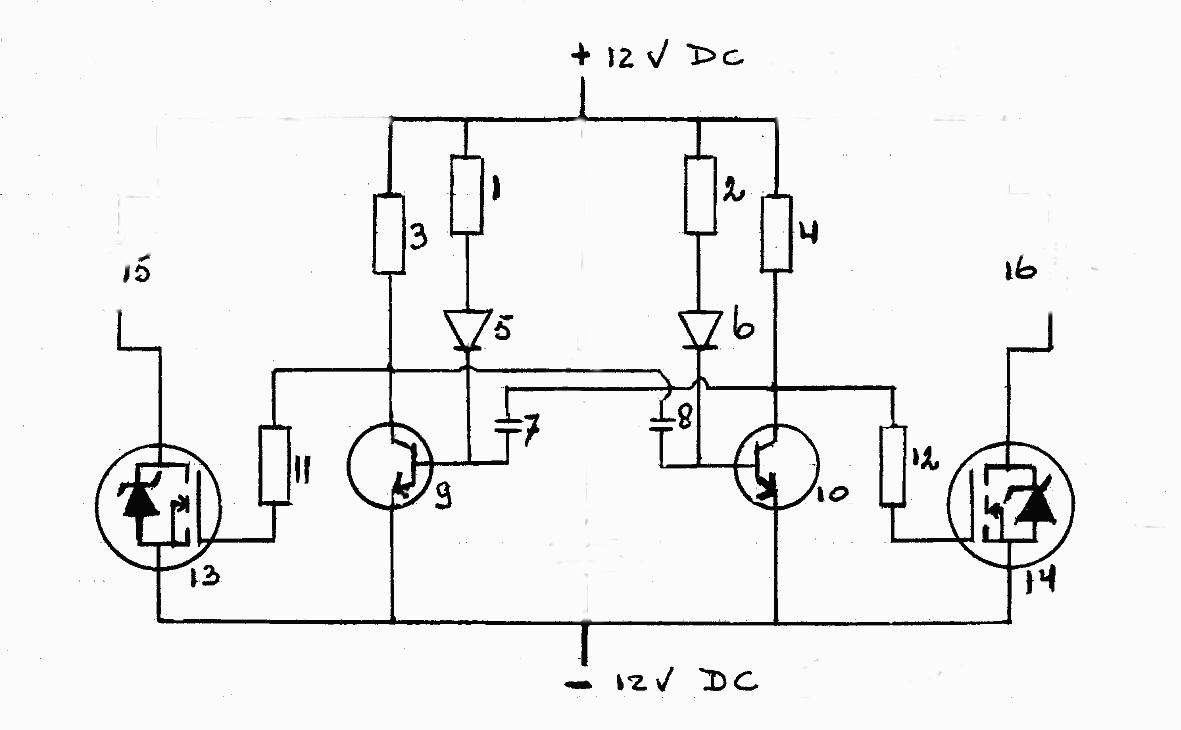
Nevertheless I found this SS type vibrator worth to recall when someone needs it:
Perhaps your coil does not like an inline resistance because it is sensitive to the voltage level and a voltage drop across the resistance is excessive? In case of a 6V vibrator in a car radio probably the coil was optimized for a voltage range the 6V battery established i.e. between 6-7.5V, to keep the vibration frequency within spec.
Thanks, Gyula
Originally posted by john_g View PostHi Gyula
I hadn't seen Ossies thread - will have a look. For some reason the coil I'm using doesn't like an inline resistance - need to look into this more, however the spikes are impessive.
Some info here on solid state replacements of vibrators:
The AWA Journal - More Adventures With Transistors
If you google "replacing radio vibrator with transistor" you should get some more info.
Regards
John
Comment

Comment