-
-
hundreds -
Stan Meyer machine replicated as early as 2001.
Ok, doesn't look like you are trying hard enough. The JLN Labs home page. I replicated his Water Fuel Cell, also. The correct terminology should be a "Resonant Regenerative Fuel Cell" - not "Water Fuel Cell". My online interview and free plans are here:
20130114 – The Alternative Energy Hour | The SmartScarecrow Show
It's fairly easy - it took me 15 months (on and off) to get it working. I received no money or even credit from replicating this, either. Guys like me are hassled by the local, conservative, "science" community, so, there are people who don't want that attention.
I own no patents, therefore, have nothing to be afraid of by openly sharing my generic Stan Meyer machine with others.
If you want to build it, than build it. If not, why bother criticizing or doubting people who do?
The car companies will not build water-powered cars, until they get a chance at selling natural gas-powered cars, first. It will be decades before a commercially available water-powered car is available. That is what has become of this technology. Build your own, that's all I can say.Comment
-

...and many people don't realize gasoline is just water.
Now I understand why the best proof Aaron could come up with for the importance of nitrogen in Stan Meyers WFC was some red car with a lawnmower carb running on a ratio of 1 litre of water to 1 gallon of gasoline without feeling the need to substantiate why, on the other hand he claimed it ran exclusively on water. So now I get it. Gasoline is water, water is gasoline--no diff.
skepticlown' says, fact-check for yourself.Originally posted by Brian995 View PostComment
-
"Ein~+ein"
Please drop the moronic logic. The only thing you're proving is that you're completely incapable of comprehending basic English. I told you what my jet engine did when I recycled the exhaust so now the conclusion that I'm coming to is that you're here to disrupt and cause trouble, because it has been spelled out for you multiple times and you act like some stooge that never heard different.Originally posted by Ein~+ein View Post
The best proof I offered about Nitrogen for those that believe Stanley Meyer ever ran a car on water is the proof in Stan Meyer's own words throughout many of his patents that nitrogen dilution of the hho slows the burn, which allows you to get the thermal energy out of it. If you can't comprehend this, you should take up basket weaving or some other hobby because you obviously are wasting everyone's time with your dog and pony show posts.
This "proof" you point out actually proves my point, but you appear to be too blind to see it. The "pop" is a detonation and is NOT combustion - why? Because the HHO is in a volatile form where you do NOT get the thermal energy from the hydrogen - so no, it won't move a matchbox car - especially in that amount.
Besides being common sense at this point, which it has evidently evaded you, THAT is the point of diluting the hho with nitrogen so you don't get a "pop" anymore, you get a real combustion.Sincerely,
Aaron Murakami
Books, Videos, ESTC Conference Info, Blog, etc. https://emediapress.com
Comment
-
Technically, he was right--the predominant element in both the gasoline and water molecule is hydrogen. But given that no one, not even Aaron, can provide evidence that Stan's WFC did not depend on gasoline as it's primary fuel source, I'm inclined to think Stan chose to call gas 'water'.
I don't think you understand why gasoline and diesel have such high energy density compared to hydrogen gas. Actually, neither chemical bond has a single atom of oxygen. What gives gas its potency is the number of hydrogen atoms per molecule (18 H to 4-12 Carbon):
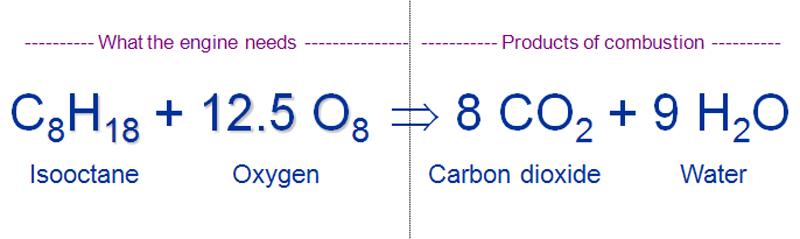
My guess is that to find them in liquefied state at ambient temperature, they need to bond with carbon--otherwise we'd be in that much less-volatile hydrogen gas that needs pressurizing to be of any use.
Tell you what. I'll light a match in a plasma air and nitrogen-filled room if you do the same in one devoid of any nitrogen but filled with oxygen and hydrogen gas we'll see who ends up looking like this:The combustion inside an engine start thanks to the reaction of bonding electrons with plasma oxygen.. more electrons more thermal energy .. more plasma oxygen more power.. diesel fuel has more carbon and hydrogen atoms and more bonding electrons than the gasoline and thanks to compression an diesel engine has more plasma oxygen. The main problem of engines is that nitrogen isn't transformed into plasma and without that condition can't react!! The plasma air is the real fuel!!"

But Tutanka, you do raise an interesting question about air, albeit indirectly:
What if I pumped pure oxygen into my car engine instead of using the air in the atmosphere?
(I've bolded nitrogen's role since for gasoline, it does indeed perform the role Aaron attributes to it, but gasoline ≠ gaseous hydrogen, 'water', or 'plasma air'):
The air around us is about 21 percent oxygen. Almost all the rest is nitrogen, which is inert when it runs through the engine. The oxygen controls how much gasoline an engine can burn. The ratio of gas to oxygen is about 1:14 -- for each gram of gasoline that burns, the engine needs about 14 grams of oxygen. The engine can burn no more gas than the amount of oxygen allows. Any extra fuel would come out of the exhaust pipe unburned.
So if the car used pure oxygen, it would be inhaling 100 percent oxygen instead of 21 percent oxygen, or about five times more oxygen. This would mean that it could burn about five times more fuel. And that would mean about five times more horsepower. So a 100-horsepower engine would become a 500-horsepower engine!
So, for equivalent horsepower, would this not mean a much smaller block, lighter engine and therefore more efficient system (if only the supply of pure oxygen weren't the obstacle)? Yes and no. Read on:
So why don't cars carry around pure oxygen? The problem is that oxygen is pretty bulky, even when you compress it, and an engine uses a LOT of oxygen. A gallon of gasoline weighs 6.2 pounds, so the engine needs 86.8 pounds of oxygen (6.2 x 14) per gallon of gasoline. Oxygen is a gas, so it is extremely light. One pound of oxygen fills 11.2 cubic feet of space, so a gallon of gasoline needs 972.16 cubic feet of oxygen to go with it. If your gas tank holds 20 gallons of gasoline, you would have to carry almost 20,000 cubic feet of oxygen with it! This is a lot of oxygen - so much that it would fill a 2,500 square foot house.
Even if you compress the oxygen to 3,000 psi (pounds per square inch), it will still take 100 cubic feet to store it. To put that into perspective, a standard scuba tank holds about 80 cubic feet of gas, so it would take 250 scuba tanks to hold all that oxygen.
Because oxygen is so bulky, what people use instead is nitrous oxide. In the engine, nitrous oxide turns into nitrogen and oxygen, and it's the oxygen that people are after. Nitrous oxide easily liquefies under pressure, so you can store a lot more of it in a bottle than you can gaseous oxygen, which does not liquefy. Even so, a typical system will supply only one to three minutes of nitrous to the engine. In the process, it adds about 100 horsepower to a typical big block engine. The biggest problem is that the extra gasoline that the nitrous allows in the cylinder increases pressure in the engine so much that it can do some real damage, unless the engine is designed to handle it. That would be the same problem you would have with an engine breathing pure oxygen -- it would have to be quite beefy to handle the load.
This makes a lot more sense to me, but like I said, don't take my word for it.Comment
-
GOOD EXAMPLEOriginally posted by Ein~+ein View Post
If you sent pure oxygen inside your engine all oxygen is transformed in plasma and you obtain an incredible powerful engine BUT YOU NEED ADDITIONAL FUEL .. ADDITIONAL FREE ELECTRONS.. MORE OXYGEN MORE ELECTRONS..
NOS work in the same mode.. is TURBO CHEMICAL ..you add extra oxygen contained inside N2O molecule and you increase your engine power X times but you need TO ADD EXTRA FUEL or you can't obtain more power!!Comment
-
Originally posted by tutanka View PostWell, which is it?Originally posted by tutanka View Post
Like Aaron and Stan Meyer, you're saying 2 different things. Aaron accused me of contorting his words when all I did was copy them verbatim--clear to anyone who bothered to click on the direct links. On the one hand he said the red car ran on water, but elsewhere he claimed it ran on gas.Comment
-
Originally posted by Ein~+ein View Post
Fuel in fact are electrons to high speed.
You need plasma air and energized electrons.. water and plasma air have enough electrons for start combustion reaction.
Stanley Meyer with wfc injector had a good intuition but understand just in part the right reaction, him think that is hydrogen responsible of thermal explosive energy.
Is Wrong!!
The thermal explosive energy born from interaction of plasma air (atoms), the electrons released from water during the dissociation and the heat produced from H2/O2.
All togheter at the same time!!Comment
-
This 'plasma' idea of yours makes absolutely no sense. Does anyone even know what Tutanka's talking about?

Like I said, I'll light a match in a room of plasma air and nitrogen but are you willing to do the same in one filled with only hydrogen gas and pure oxygen?Comment
-
@"Einstein"
You take it out of context and that turns you into a liar.Originally posted by Ein~+ein View Post
Here is a quote verbatim from you:
So since you are ignorant about this subject, why do you persist? Can you even show any experiments that you've ever done in this arena? If not, then you should keep your pencil jockey ignorance to yourself because as I said, you take things out of context and that turns you into a liar and you're doing it intentionally to cause trouble. I actually don't believe you're stupid enough to not know you're doing it.Originally posted by Ein~+ein View Post
First of all, your nickname is Einstein, but Einstein's science is quack science so if he is your role model, I can understand perfectly why you are incapable of comprehending anything told to you.Sincerely,
Aaron Murakami
Books, Videos, ESTC Conference Info, Blog, etc. https://emediapress.com
Comment
-
It was a combination of ignorance and curiosity that compelled me to ask questions but since you've read up on much of what Stan wrote, can you not see that the best evidence you could come up with does not inspire confidence? I'm talking about the red car with the lawnmower carb that runs on gasoline. I'm left to conclude Stan also took liberties with the term 'water' as he had with 'fuel cell' and his 1992 'old theory' statement about hydrogen supports that conclusion.
It's a fact that electrolysis is not an efficient means of producing hydrogen. Why else would Jon Abel refuse to say anything about the efficiency of his Stan Meyer 'resonance' replication? I was the only one to challenge him on that. If improvements over conventional electrolysis are covered up by 'big oil' then the lives of those 2 profs in my 'CBC News' thread are in grave danger. Almost all hydgrogen produced today comes from natural gas.
Folks, did or did I not ask Aaron to explain the discrepancy between his own posts at which his response was: "I'm through with you!"? Is anyone else willing or able to do so?Originally posted by Aaron View Post
Let's suppose you could run a car on nothing but water. Wouldn't you need far more battery power than an EV to both separate the molecule and pressurize the gases (for reasons I've stated) unless done in a vacuum? Such a system would go through water as fast or even faster than gasoline. Although they're both 2/3 hydrogen, the compactness of the isooctane molecule suggests gas has far more hydrogen per volume than water. Even theoretically, it doesn't seem practical. Why bother spending thousands of dollars and hours (isn't that how you put it?) experimenting to prove someone else's pseudo-scientific claim? Take a look at that 'Don Smith Devices - Too Good to be True? thread -- well over a million views, hundreds of pages and Level's conclusion.
It won't surprise those considering Stan a fraud that he first made news during the Opec Oil Crisis. At such times when panic and wishful thinking obscures better judgement. Conspiracy theorists won't admit that it would've been in America's best interests at the time to promote technology to rid itself of mid-east oil dependency.Comment
-
get the facts straight
Let's forget about the specialized knowledge. You should take a critical thinking class because you have missed the boat every time. You are simply unable to discern the difference between DISTINCTIONS that are spelled out for you over and over. You see words being posted and you are demonstrating that you are incapable of contextualizing them inside of your mind to keep the facts straight. It is like your chronically stoned and are stuck in an association game where the border between one concept and another has broken down. You might as well take all the words in this paragraph and scramble them randomly and then make a claim that the gibberish that is spelled out is saying the same thing just because you're using the same words. You are LITERALLY doing this to what I have said in the context that I have said it.Originally posted by Ein~+ein View Post
Get one thing straight, the only claim I'm making about Meyer is WHAT HE ACTUALLY SAID. Whether or not he drove a car on water is one thing. Whether or not he is claiming that nitrogen dilution makes a combustible fuel that runs an engine - YES, that is what he said, that is what I AM claiming he said and I proved it 100% indisputably that this is the case and this case is closed.
And being that you don't even share any of your own work about anything, you have ZERO room to criticize the red car even if it does use gas because it still demonstrates more than anything you have even shown yourself.Sincerely,
Aaron Murakami
Books, Videos, ESTC Conference Info, Blog, etc. https://emediapress.com
Comment
-
As far as Meyer being a fraud, the only thing the court case I studied proved is that if you add electrolyte to the WFC, current will flow and then its just simple electrolysis. They made him put electrolyte in the cell and then said see, its just electrolysis. Wouldn't let him use plain water.Comment

This forum is preserved as a permanent archive. The community continues at eMedia Press.
- If this is your first visit, be sure to check out the FAQ by clicking the link above. You may have to register before you can post: click the register link above to proceed. To start viewing messages, select the forum that you want to visit from the selection below.

 Tweet
Tweet
Comment